
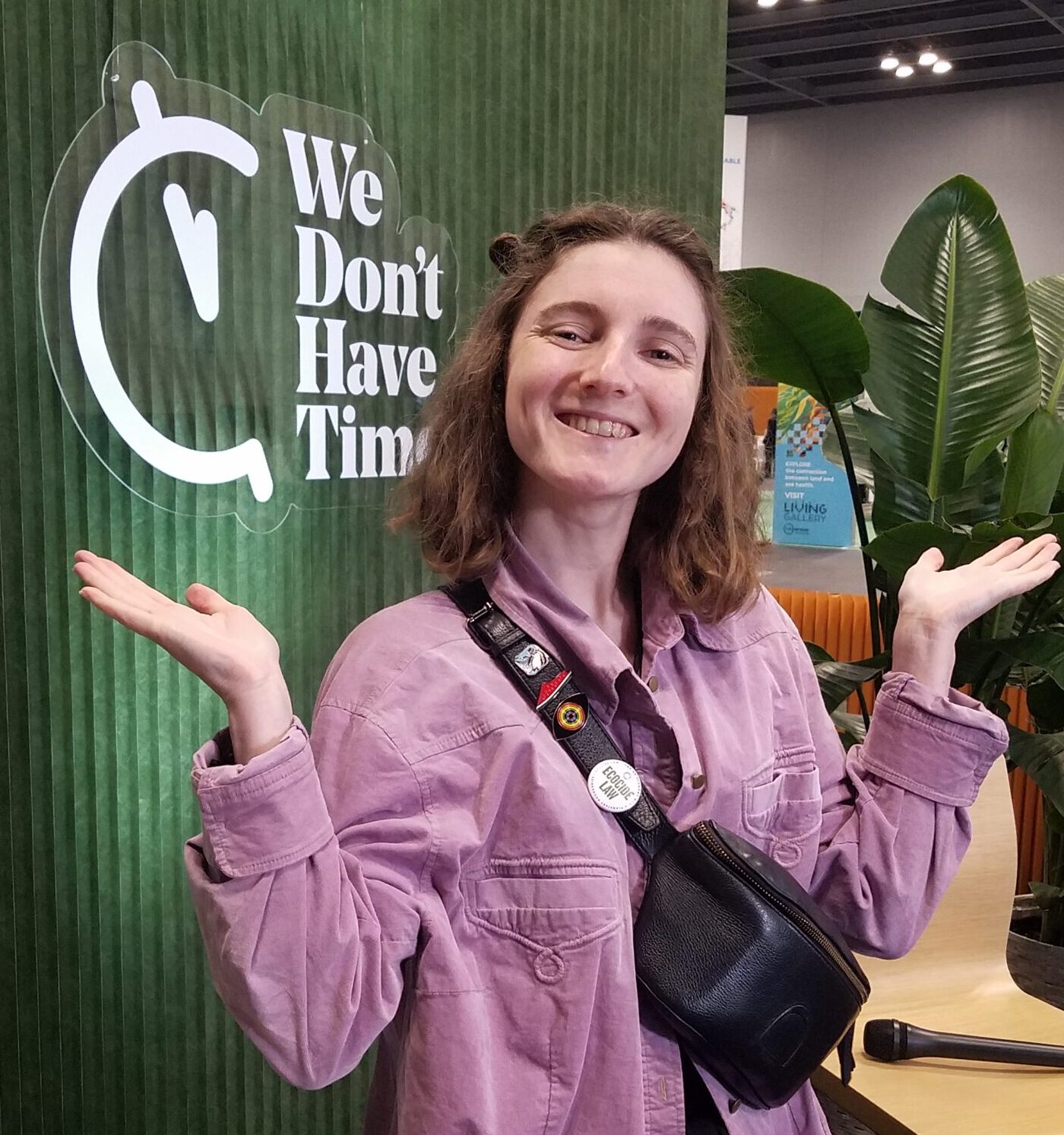
Praktisk Solidaritet’s European cooperation project Co-Lab: Resilience brings together people who, in various ways, devote their commitment and voluntary efforts to strengthening rights work in Sweden, Cyprus, and Slovakia. Through a series of portraits, we want to highlight the personal stories of the participants. The crowning glory of the project will be a film that exemplifies a European civil society that is organizing itself for rights and democracy at a time when these values are, at best, taken for granted and, at worst, being dismantled.
Marine Stephan is a French intersectional feminist and climate activist (among many other labels) currently living in Stockholm. Activism is a big part of her life and who she is at her core. For the past couple of years she’s been interested in community as a theoretical topic and what friendship can do as a revolutionary tool.
“It [friendship] helps me to focus back on the things that matter and to rethink small trivial things as being part of a bigger thing. Putting friendships before everything is good not only for me as a human being and for my friends, but also helps to build links between people. And that helps in the face of rising fascism.”
A feminist baseline
Marine grew up in a small village in France with a population of less than 600 inhabitants. While she didn’t grow up in a conservative environment, activism and political questions were never openly discussed and named as such. “I was aware of these questions, but in a small village there’s literally nothing, no demonstration, nothing.”
It wasn’t until her high school teacher took the class to see the movie: Suffragettes, that she could put a word on her activism. The movie highlights women’s suffrage in the United Kingdom and raises questions regarding women’s self determination, domestic abuse, sexual violence in the workplace, freedom of speech, and many more.
This experience became a steppingstone for her following years of activism. She went on to choose her university partially because of a feminist organization they had, the first active choice she made. When she joined the organization, she met a girl, who later became a close friend, who was very passionate about social and political issues. This friend reformed Marine’s view on feminism. She realized that feminism isn’t a white issue. It is intersectional, and it needs to be angry.
Anger & hope
“It’s [anger] good in the beginning, it’s a fuel, but after a while there’s no more fuel and in the long run it gets tiresome. I guess that’s where hope comes in. But I think both come hand in hand. You get angry because you wish things were better, and you hope things will get better by acting on that anger.”
Her idea of anger and hope refers back to a quote from Greta Thunberg that she heard at a Palestine and Climate Justice Conference she attended a couple of years ago. According to Thunberg, anger can be used as a driving force to act, to do something for our future, and not acting is a luxury that the world cannot afford. You have already given up if all you’re doing is hoping for a better future. “I think hope in that sense is good, but if you hope too much but don’t do anything to act towards it, it won’t result in anything.”
An individual person’s lack of action is one of the things that frustrates her the most. While the bigger responsibility lies on politicians to make systemic changes, people can’t afford to give up and not act. It’s not about giving up on everything you love, but rather about rethinking our lifestyles so that we can put the things we love doing back at the center and add small acts that can make a change. Go visit your grandparents more. Do something cool with your friends. When you do little things you can change some people around you. “Then that might make a bigger change, even bigger than you imagined.”
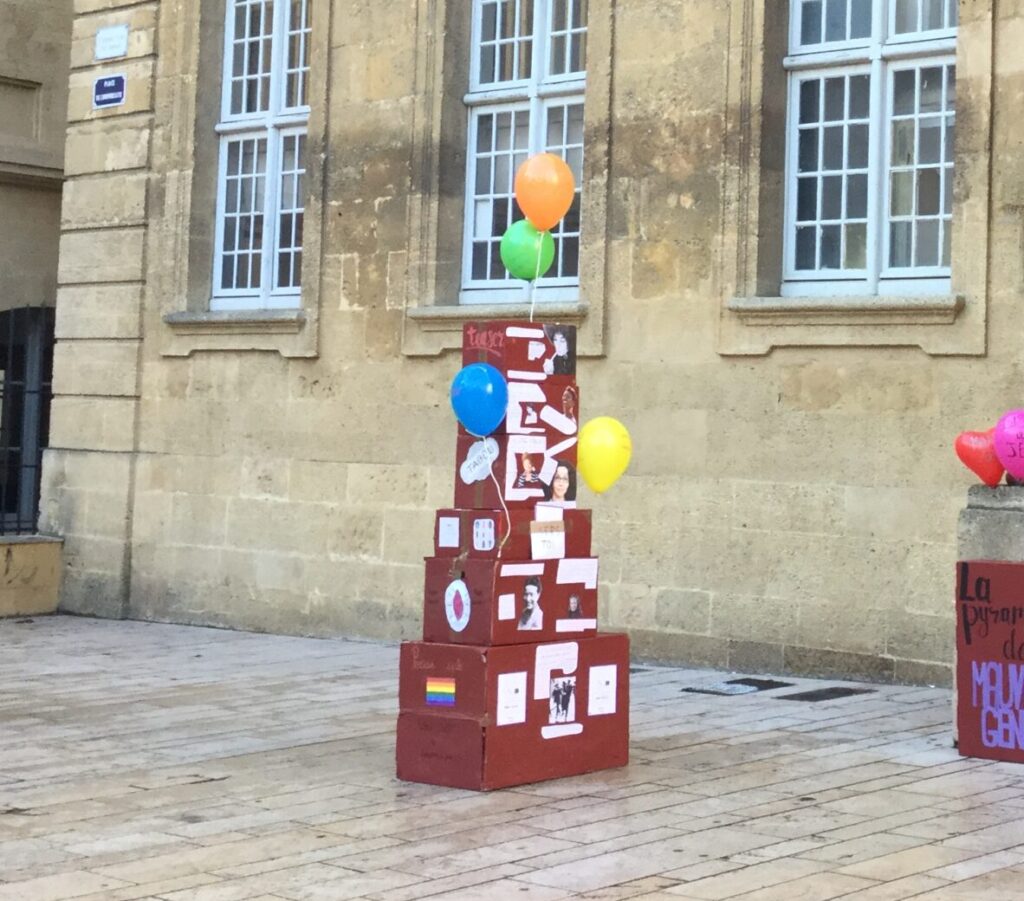
Mauvais Genre
Marine used her anger to co-found an intersectional family association at university together with two of her friends. Marine was assigned the duty of fostering their administrative relations. “The other ones were too angry to be able to talk to the administration, so they had to send me as the peaceful mediator.”
One of their main achievements was that they broke the culture of silence regarding sexual violence at their university. By creating different outlets and conversation starters, they created a safe space for women to share their experiences. For example, they built a physical pyramid of shame which showcased different messages about sexual violence. As a result, one woman reached out to them with her survivor story. With her consent the group posted her story to their Facebook, which in turn snowballed and made more women send in their own testimonies.
Drawing inspiration from the Arab Spring, the group also helped co-organized the Feminist Spring – a big congress who together created a declaration with demands the school had to answer to. These demands specified various implementations to eradicate discrimination and sexual harassment in the school and ensure the students safety and well-being. Initially, the school ignored their demands. In response, the group published the declaration online, which in turn led to the association’s president being called into the school-office the following morning to discuss her schooling. To shift the power balance, the whole group went collectively to meet the heads of the schools different departments in the early morning hours.
Two years later a Me Too-movement of that specific university happened. “Sometimes I think that we were the first stone in this big thing that exploded because we created the structure for people to actually testify.” The following year, the French government initiated an inquiry into the school, questioning why the school didn’t act when all these stories and information came to light.
“Did that change anything? I don’t know, I left the school. But I hope it did. It didn’t feel like much at the time, because we were just all the time trying, doing something else, and then doing something else. Then you sit back and you’re like; we did great things.”
We Don’t Have Time – creative storytelling as a tool
Frustrated over the fact that her political science university, whose aim is to shape our future leader, didn’t offer any classes in environmental policies and climate action, she decided to do an Erasmus year and study at Stockholm University. Choosing Stockholm University was therefore another active choice in her activism journey.
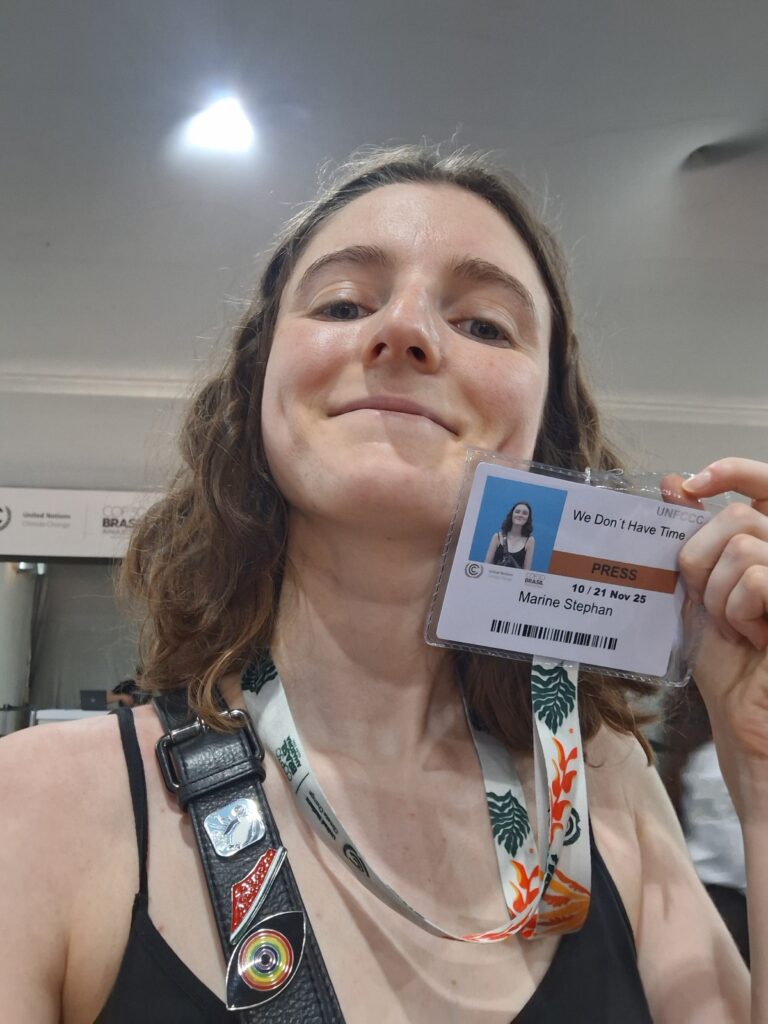
Since then her passion for the environment and climate issues has only grown. She’s currently working at We Don’t Have Time – the world’s largest media platform for climate action with their base in Stockholm. Her work has taken her around the world to different climate conferences, including COP29 in Baku 2024 and COP30 in Belém 2025. Later this spring she’s also headed to Colombia, to the First Conference on Transitioning Away from Fossil Fuels.
One of the broadcast’s ambitions is to broaden the dialogue and discuss topics in the most holistic way possible. For their broadcasts during COP30 they united on the ground activists, indigenous people, journalists, business leaders, politicians, and UN organization representatives.
Social media and algorithms can be quite dangerous and polarising but when used correctly, media and communication can be a very successful tool for social change. By changing narratives and focusing on solutions rather than problems, it can be effective in motivating people to act. “They [the solutions] need to be scaled exponentially, as we say.”
In the past year, Marine has also focused on the power of making stories more personal as a way to reach and engage more people. She has witnessed first hand how personal stories can be effective and motivational. “They [activists] start talking about their story and everyone behind the scenes is crying. And maybe that’s what’s changing us, to show that it’s a human to human connection.”
Strength from people
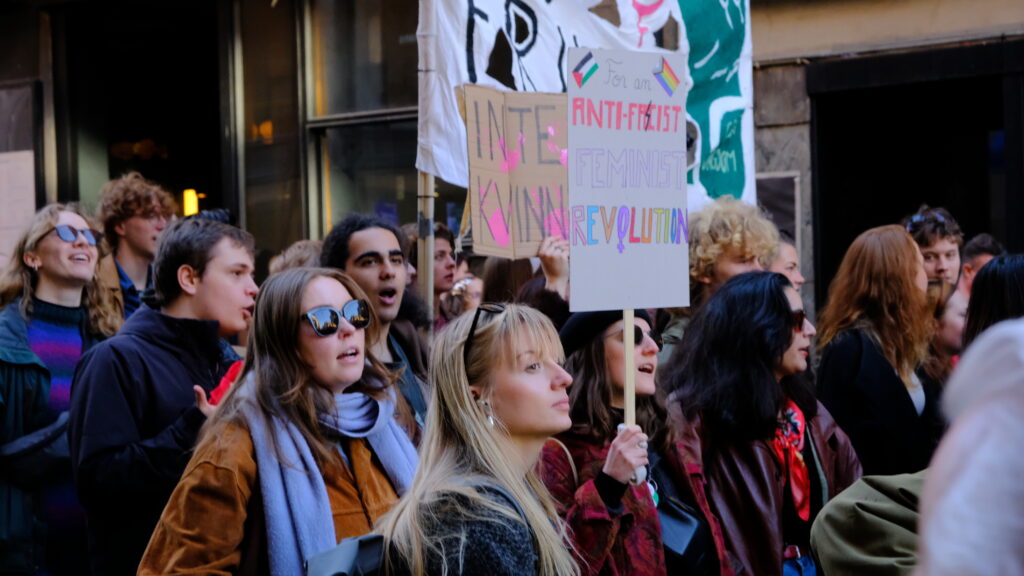
The people around her are what keeps her going when times get hard. For her, going to work is part of her activism. Seeing everyone working towards the same goal is a form of self-motivation. “If they can continue, I can continue.” They’re experiencing it all together, both the hardships and the laughs.
People, and the interpersonal connections with people are what guides her. What future does she want to leave behind for her family, for her friends, for her bigger community? The answer is simple. “A better world. A better, safer, greener, just world.” She’s going to do every little thing to make the world or one person better.
“I want to put community and humans back at the center, and with that also putting nature back at the center, because everything goes hand in hand. I think if we focus on humans/nature first, I think it could solve so much. Because that’s what matters, right? We’re humans and we should care about humans. Before everything else.”